
How Much Money Do You Actually Need to Buy a Home in Huntington Beach?
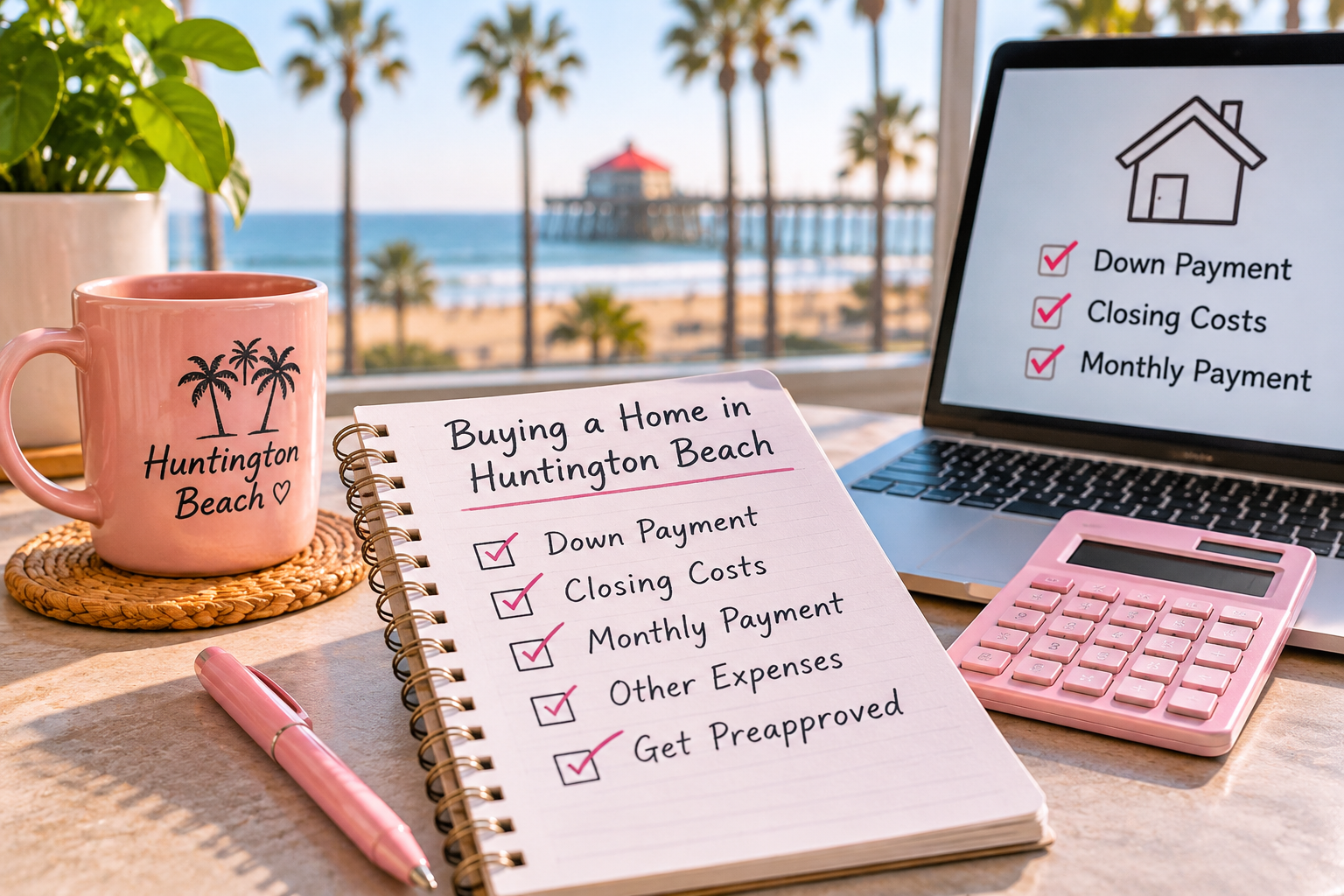
Think you need 20% down to buy a home in Huntington Beach? Think again! Here's what buyers should know about down payments, closing costs, monthly payments, and how much money to save.
By Meghan Koshar · November 9, 2026 · 8 min read
# How Much Money Do You Actually Need to Buy a Home in Huntington Beach?
One of the first questions I get from people thinking about buying a home is:
"How much money do I actually need?"
And usually, what they're really asking is:
"Do I need 20% down?"
The answer?
NO!
And this is one of the biggest misconceptions about buying a home.
I think a lot of people put off purchasing because they assume they need hundreds of thousands of dollars sitting in their savings account before they can even start looking.
Now, we're talking about Huntington Beach, California. Real estate here isn't exactly inexpensive.
But buying a home may be more achievable than you think, especially when you understand how the numbers actually work.
So let's break down the down payment, closing costs, monthly payments, and a few expenses that buyers don't always think about.
Because the last thing I want is for you to find your dream home and realize you weren't financially prepared.
1. Let's Talk About That 20% Down Payment
Somewhere along the way, everyone started believing that you absolutely HAVE to put 20% down to buy a home.
You don't.
Depending on your financial situation and loan qualifications, there are several financing options available.
Conventional Loans: Some programs allow down payments as low as 3%.
FHA Loans: Qualified buyers may be able to put as little as 3.5% down.
VA Loans: Eligible veterans and service members may qualify for zero down payment.
Other Loan Programs: Some lenders offer additional low-down-payment options, depending on the borrower and property.
Of course, there are qualifications, loan limits, credit requirements, and other factors involved.
And putting less than 20% down can mean additional costs, including mortgage insurance.
But the point is:
You don't necessarily need 20% saved to start having the conversation.
2. What Does That Actually Look Like in Huntington Beach?
Let's use a hypothetical $1,000,000 home.
I know. A million dollars sounds like a LOT of money.
Welcome to coastal Southern California. 😂
Here's how different down payment percentages would look:
| Down Payment | Amount | |---|---:| | 3% | $30,000 | | 3.5% | $35,000 | | 5% | $50,000 | | 10% | $100,000 | | 20% | $200,000 |
See the difference?
There's a HUGE gap between needing $30,000 and needing $200,000.
Now, that doesn't mean every buyer will qualify for every option, or that a particular loan program will work for a $1 million property.
But it shows why I never want someone to assume they can't buy without talking to a lender first.
Selling Surf City Tip 🌊
Before you spend years saving toward an arbitrary 20% number, talk with a knowledgeable mortgage lender.
You might be closer to buying than you think.
3. Your Down Payment Isn't the Only Money You'll Need
Okay, this is where buyers sometimes get surprised.
Let's say you've saved $75,000.
Amazing!
But before we decide how much of that should go toward your down payment, we need to look at the other expenses involved in purchasing a home.
Because there are additional costs beyond the purchase price.
And some of them can add up.
4. Closing Costs: The Expenses Nobody Gets Excited About
Closing costs are the fees and expenses associated with completing your real estate transaction.
Depending on the loan, property, and negotiated terms, these can include:
- Lender fees
- Appraisal fees
- Title and escrow charges
- Prepaid homeowners insurance
- Prepaid interest
- Property tax adjustments and reserves
- Recording fees
- Other transaction-related expenses
A general planning estimate is often around 2% to 5% of the purchase price, although actual costs can be outside that range.
On a $1 million purchase, that could mean approximately $20,000 to $50,000.
And that's in addition to your down payment.
The good news?
Some closing costs may be negotiable, and certain financing programs allow seller contributions toward eligible expenses.
This is why I want buyers to understand the entire transaction before making an offer.
5. Don't Forget About Inspections
Once your offer is accepted, we enter one of the most important parts of buying a home.
Due diligence.
This is when we investigate the property and learn more about what you're actually purchasing.
Depending on the home, we may recommend inspections or evaluations involving:
- General home condition
- Termites and other wood-destroying organisms
- Roof
- Plumbing
- Electrical systems
- Sewer line
- Foundation or structural concerns
- Other property-specific issues
These inspections aren't necessarily included in your lender's closing-cost estimate.
And while nobody loves paying for inspections, I'd much rather my buyers understand a potential issue BEFORE purchasing the home.
A beautiful kitchen doesn't tell you what's happening underneath the house.
6. Your Monthly Payment Is More Than Your Mortgage
This is probably the most important financial conversation we have.
When buyers ask me:
"How much house can I afford?"
I don't just want to know what a lender says they're approved for.
I want to know what monthly payment they're actually comfortable with.
Because your total housing payment may include:
Principal: The amount you're paying back on your loan.
Interest: The cost of borrowing the money.
Property Taxes: Based on applicable assessments and tax rates.
Homeowners Insurance: Which can vary depending on the property and coverage.
Mortgage Insurance: If required by your financing.
HOA Dues: If the property belongs to a homeowners association.
And potentially other expenses, such as flood insurance or special assessments.
Especially in Huntington Beach, where we have everything from detached homes to condos and waterfront properties, these additional costs can make a big difference.
A condo with HOA dues and a detached home without an HOA may have very different monthly expenses, even at similar purchase prices.
The goal isn't to buy the most expensive house you can qualify for.
It's to buy a home you love while still being able to enjoy your life.
Because what's the point of living in Huntington Beach if you can't afford to actually enjoy Huntington Beach?
7. What About Property Taxes in California?
This is another important thing to understand.
California's Proposition 13 generally establishes a base property tax rate of 1% of assessed value, with additional voter-approved taxes and other charges potentially applying.
When you purchase a home, the property is generally reassessed based on its change in ownership.
So don't assume the property taxes shown on a listing are exactly what you'll pay.
The current owner may have purchased the property decades ago.
Their tax bill could look VERY different from yours.
This is something we'll want to estimate before you write an offer.
8. What If You're Buying a Condo?
Condos can be a great option for buyers who want to get into the Huntington Beach market.
But there are a few additional financial considerations.
Most condos have HOA dues.
And those dues may cover certain amenities, maintenance, insurance, or shared expenses, depending on the community.
Before purchasing, we'll want to review the HOA documents, financial information, budgets, and any known assessments.
Because a beautiful condo with a surprisingly low HOA payment isn't automatically a better deal.
We need to understand what the HOA covers and the financial condition of the association.
9. Don't Spend Every Dollar You Have on the House
Please.
I know how tempting it is to stretch when you find something you absolutely love.
But I never want my buyers to close escrow and have absolutely nothing left in savings.
Because you know what happens right after buying a house?
Something.
😂
Maybe the refrigerator needs replacing.
Maybe you want new furniture.
Maybe you decide the entire house needs to be painted.
Maybe you discover that owning a home requires approximately 47 trips to Home Depot.
It's always something.
Having money set aside for emergencies, maintenance, and unexpected expenses is important.
Being a homeowner should feel exciting, not financially terrifying.
10. Can You Ask the Seller to Help With Closing Costs?
Sometimes, YES!
And this is where having a good negotiation strategy comes into play.
Depending on the market, the property, and the seller's situation, we may be able to negotiate a credit toward eligible closing costs.
For example, instead of negotiating only on the purchase price, we might explore a seller credit that helps reduce the amount of cash you need at closing.
Of course, there are financing rules that limit how credits can be used.
But it's an option worth discussing.
And in a market where some homes are sitting longer, terms beyond the purchase price can become especially important.
11. Should You Wait Until You Have More Money Saved?
Maybe.
But not necessarily.
This is such a personal decision.
If your finances aren't stable, your monthly payment would be uncomfortable, or you don't have adequate reserves, waiting may absolutely make sense.
But if you're financially prepared and simply waiting because you think you HAVE to put 20% down?
I'd encourage you to explore your options.
Because while you're saving, home prices, mortgage rates, and your personal circumstances can all change.
Nobody knows exactly what the market will look like next year.
The best time to buy isn't automatically when rates are lowest or when everyone else is buying.
It's when the numbers and the lifestyle make sense for YOU.
12. Start With a Conversation, Not Zillow
I love looking at houses as much as anyone.
Actually, probably more than most people.
It is literally my job. 😂
But before we start touring every cute house in Huntington Beach, I want you to feel confident about your finances.
That means understanding:
What you're comfortable spending.
What financing options may be available.
How much cash you'll need.
What your monthly payment could look like.
And how much money you'll have left after closing.
Once we understand those numbers, the house hunting becomes a whole lot more fun.
Thinking About Buying a Home in Huntington Beach?
November is all about BUYING A HOME here on Selling Surf City.
Last week, we talked about what I wish every buyer knew before starting the process.
This week, we're talking about the money.
And over the next few weeks, we'll get into writing offers, negotiations, inspections, and what actually happens during escrow.
I'm Meghan Koshar, a Huntington Beach local and REALTOR® behind Selling Surf City.
Whether you're buying your first condo, moving into a larger home, or searching for your dream property near the beach, I'm here to help you understand the process and make informed decisions.
Because buying a home isn't just about what you can afford on paper.
It's about finding a home that fits your finances AND the life you want to live.
And around here, you already know my favorite advice:
Choose the lifestyle first. Then choose the house. 🏡🌊

Related reading
Buying a Home in Huntington Beach: What I Wish Every Buyer Knew Before They Started
Thinking about buying a home in Huntington Beach? Here are 15 things I wish every buyer knew before starting, from getting preapproved and choosing a neighborhood to writing an offer, inspections and escrow.
November 2, 2026 · 9 min read
How to Write a Winning Offer on a Home in Huntington Beach (Without Overpaying)
Think the highest offer always wins? Think again! Learn how to write a competitive offer on a home in Huntington Beach, from pricing and contingencies to negotiating terms that make your offer stand out.
November 18, 2026 · 10 min read
The Orange County Housing Market Is Slowing: What Buyers & Sellers Need to Know
Mortgage rates have surged and Orange County buyer demand has dropped 18% in six weeks. Here’s what the latest Steven Thomas housing report means for Huntington Beach buyers and sellers.
October 16, 2026 · 8 min read
Huntington Beach Real Estate
Thinking About Moving to Huntington Beach?
Whether you're two years out or already touring homes, a conversation with a local agent beats another hour on a listing portal. I'll walk you through neighborhoods, pricing and timing — no pressure, no script.